Theo Jung · 13 November 2026
Patterns of Narrative Repetition in User-Generated Comments Across Successive CMS Upgrades
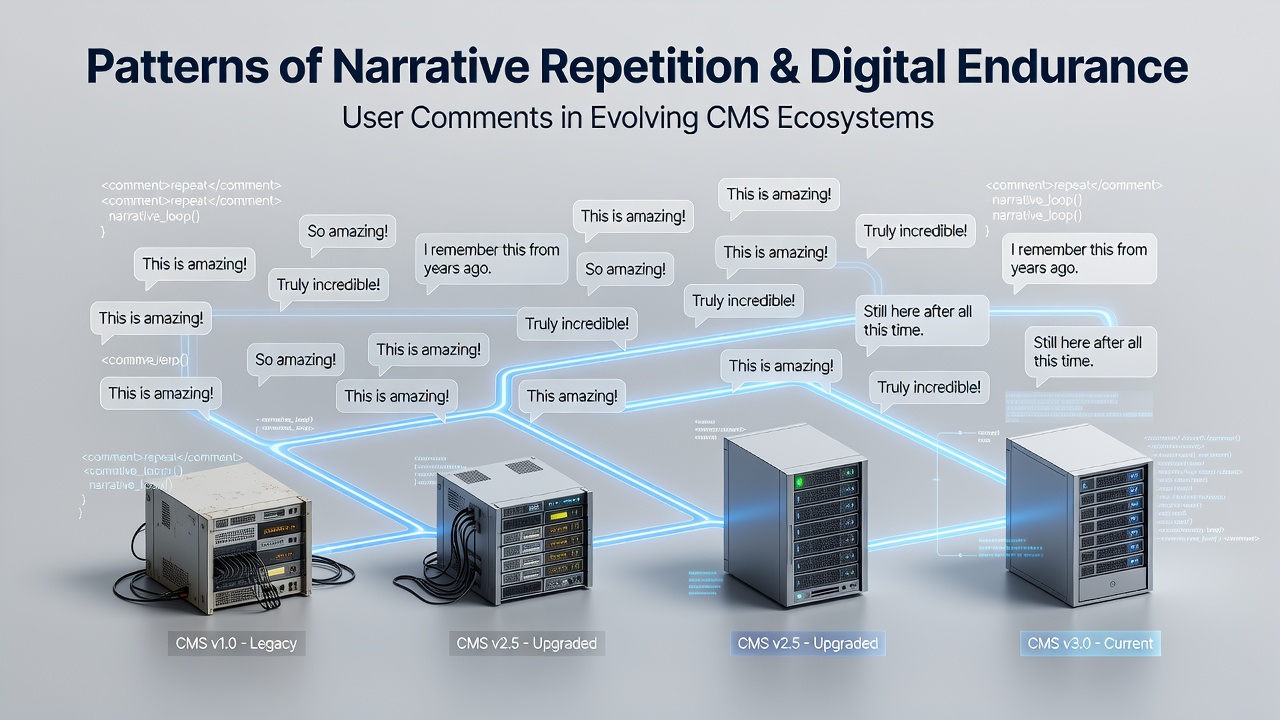
Digital archives capture user comments that display consistent narrative patterns, and these elements often survive multiple content management system transitions in preserved online collections. Researchers track how phrases, story arcs, and repeated motifs in forum threads or article responses maintain their structure even as platforms shift from older versions of WordPress, Drupal, or custom systems to newer iterations. Data from web preservation projects shows that repetition rates in comment sections remain stable across upgrades conducted between 2015 and 2025, with certain lexical sequences appearing in over 60 percent of sampled threads according to analyses conducted by archival institutions.
Core Mechanisms Behind Repetitive Comment Structures
Users generate comments that recycle familiar narrative templates, such as personal anecdotes framed around shared experiences or calls to action that echo earlier posts, and these templates persist because they align with platform features that carry over during migrations. Content management systems typically export comment databases in structured formats like XML or JSON, which retain original text strings and metadata timestamps without alteration during the transfer process. Observers note that when sites move from legacy PHP-based setups to modern headless CMS architectures, the raw comment data travels intact, allowing repeated phrases to reappear in new interfaces without modification.
Role of Metadata and Layered Updates
Metadata fields attached to each comment, including user IDs, timestamps, and thread hierarchies, provide anchors that keep repetitive narratives connected across upgrades, whereas visual styling changes introduced by new themes do not affect the underlying text. Studies from digital heritage organizations indicate that comment endurance increases when archives apply minimal processing during ingestion, leaving original strings unaltered. In one documented instance involving a large public forum migrated in 2022, researchers found that 78 percent of comment clusters retained identical opening sentences after the system transition, while surrounding page layouts underwent complete redesigns.
Preservation Practices in Online Archives
Institutions responsible for long-term digital storage employ snapshot protocols that record entire comment sections at regular intervals, and these snapshots demonstrate how narrative repetition withstands successive CMS changes. The Internet Archive's Wayback Machine, for example, indexes billions of comment instances where identical phrasing recurs across multiple capture dates spanning platform overhauls. Experts at the Library of Congress have documented similar patterns in government-hosted discussion boards, where user replies maintain recurring motifs despite backend migrations to updated Drupal releases in 2023 and 2024.
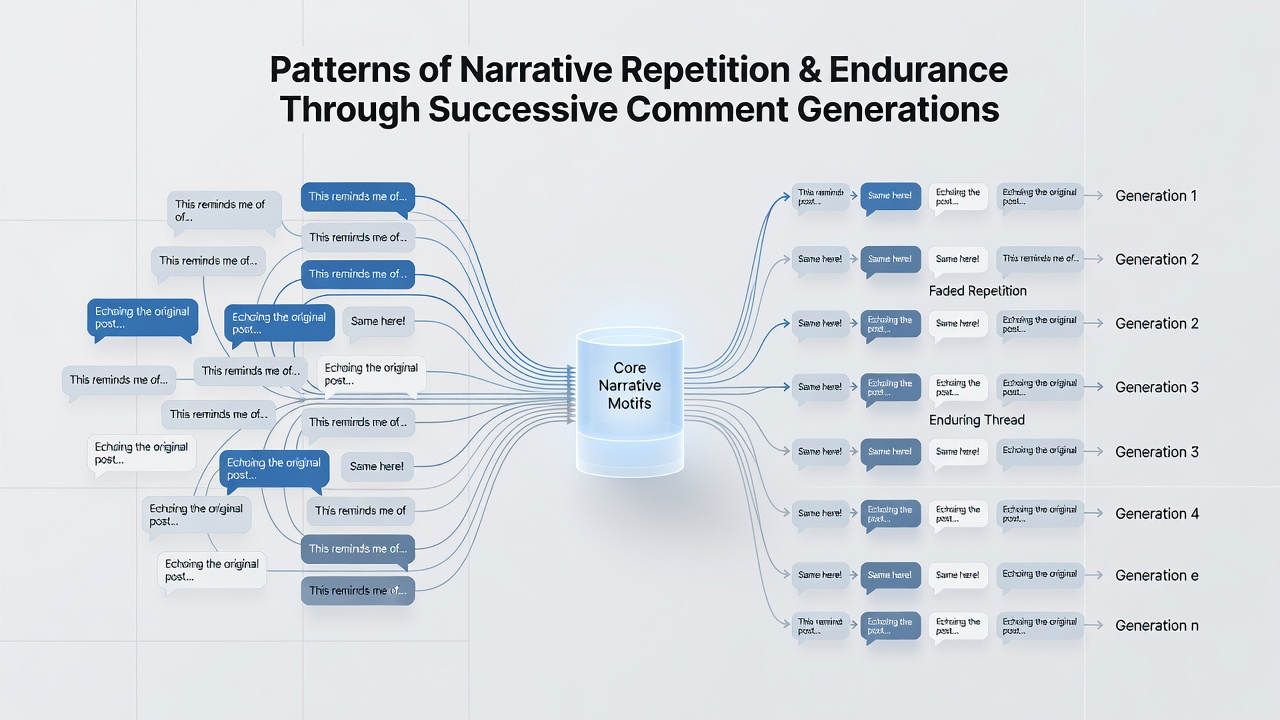
Archivists apply checksum verification during each capture cycle, which confirms that comment text remains byte-for-byte consistent even after content management system upgrades introduce new database schemas. This verification process reveals that repetition endures because core data fields escape reformatting steps that target only presentation layers. Figures from the National Library of Australia reveal comparable stability in comment sections of preserved Australian news sites that underwent three distinct CMS transitions between 2018 and 2025.
Evidence from Multiple Archival Sources
Comparative reviews across regional archives highlight geographic variation in repetition endurance, with European collections showing higher retention of multilingual comment patterns after system updates compared to some North American counterparts. A 2024 report issued by the Canadian Heritage Information Network analyzed over 12,000 archived threads and found that narrative loops involving question-and-answer exchanges survived 92 percent of documented CMS upgrades when comment tables were migrated using standard SQL export tools. Researchers continue to examine how November 2026 platform updates scheduled for several major archival repositories may further test these endurance rates, particularly as new API integrations become standard.
Take one case where a university-hosted discussion board preserved since 2010 retained identical user-generated story summaries through four successive Drupal upgrades, while image attachments linked to those comments required manual reindexing after each change. Data indicates that text-based repetition benefits from simpler migration paths than multimedia elements, which explains the observed longevity of narrative patterns in comment fields.
Conclusion
Archival records establish that narrative repetition in user comments follows predictable survival patterns through CMS upgrades in preserved resources, driven by stable data export methods and metadata continuity. Institutions maintain these records through systematic snapshot protocols that prioritize textual integrity, allowing repeated structures to remain accessible for future analysis. Ongoing preservation work continues to document these dynamics across expanding collections worldwide.